
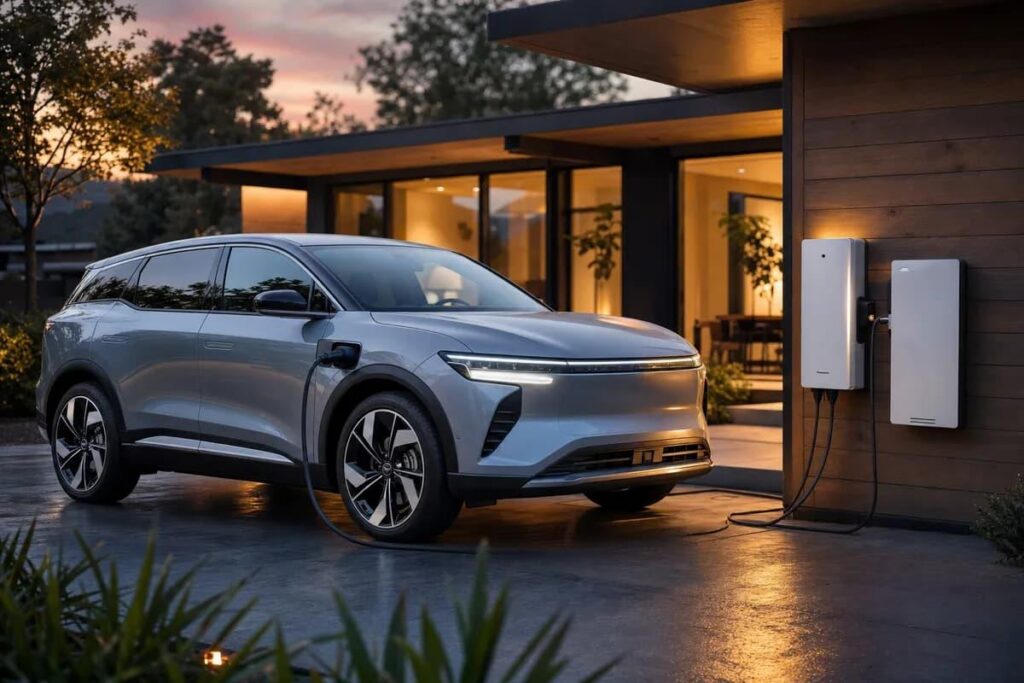
Electric vehicles are becoming more than transportation. Some newer models can also supply electricity to appliances, homes, and even utility networks. This technology is called bidirectional EV charging, and it is creating new possibilities for how drivers use the energy stored in their vehicle batteries.
Bidirectional EV Charging: What Vehicle Owners Should Know
 Traditional electric vehicle charging works in one direction. Electricity travels from a home charger or public charging station into the vehicle’s battery. Bidirectional charging adds another capability: under the right conditions, electricity can flow back out of the vehicle to power external equipment.
That means a compatible EV may function as a temporary backup energy source during a power outage, support household energy management, or participate in certain utility programs.
However, the technology also raises important questions about charging equipment, vehicle compatibility, battery condition, electrical safety, software, and maintenance. Drivers considering bidirectional charging should understand these requirements before investing in equipment.
What Is Bidirectional EV Charging?
Bidirectional EV charging allows a compatible electric vehicle to both receive electrical energy and deliver stored energy to an external system.
In ordinary charging, the battery stores electricity for driving. With bidirectional operation, some of that stored electricity can be used for another purpose.
The U.S. Department of Energy explains that bidirectional vehicles can supply electricity to buildings, specific electrical loads, or the grid when paired with suitable charging equipment.
Not every electric vehicle supports this capability. Even among compatible vehicles, the available functions and equipment requirements can differ considerably.
Understanding V2L, V2H, and V2G
Bidirectional charging includes several related technologies. Although the terms sound similar, they describe different ways to use energy stored in an electric vehicle.
Vehicle-to-Load (V2L)
Vehicle-to-load allows a compatible EV to power certain external appliances or equipment. Depending on the vehicle, this may involve a built-in electrical outlet or an approved adapter.
For example, drivers might use V2L to operate small appliances, tools, or recreational equipment within the vehicle’s rated power limits.
Vehicle-to-Home (V2H)
Vehicle-to-home allows a compatible EV to supply electricity to a home’s electrical system through properly installed equipment.
During a utility outage, a suitable V2H installation may provide backup power for selected household circuits or a larger portion of the home, depending on system capacity.
Vehicle-to-Grid (V2G)
Vehicle-to-grid allows an EV to export electricity to the utility grid through an approved arrangement. This may support grid management or provide financial benefits where eligible programs exist.
These distinctions are also explained by Marin County’s bidirectional charging guide.
How Bidirectional EV Charging Works
An electric vehicle battery stores direct-current electricity, commonly called DC power. Most household electrical systems use alternating current, or AC power.
To supply electricity to a home, the system must convert energy into a form that household equipment can use. Depending on the vehicle and charging system, this conversion may occur inside the vehicle or through external equipment.
A compatible charging system also needs to communicate with the vehicle. Electronic controls manage how much energy flows, when charging or discharging occurs, and what operating limits apply.
Software may also allow owners to set a minimum battery charge level. This can help preserve energy for driving instead of allowing household electricity use to consume too much of the battery’s available capacity.
For example, an owner might configure a supported system to stop supplying home power when the vehicle reaches a selected charge level.
These functions depend on the specific vehicle, charging equipment, and manufacturer software.
Why Vehicle-to-Home Charging Is Attracting Attention
One of the most practical applications of bidirectional charging is home backup power.
Power outages can interrupt lighting, refrigeration, communications, heating, cooling, and other essential household activities. A compatible EV with suitable home equipment may provide temporary electricity when the utility supply is unavailable.
Unlike a stationary home battery, an EV battery is primarily designed for transportation. However, when the vehicle is parked and connected, some of its stored energy may also be available for backup use.
The Department of Energy’s mobile energy storage guidance identifies backup power and energy management as potential applications for bidirectional vehicles.
Actual backup duration depends on battery capacity, available charge, conversion losses, household electricity demand, and the power limits of the installed equipment.
Equipment Needed for Vehicle-to-Home Charging
Buying a bidirectional-capable EV does not automatically mean the vehicle can power an entire house.
A home installation may require specialized charging equipment, an inverter, electrical controls, protective equipment, and a compatible connection to the household electrical system.
Some systems also require a transfer switch or other approved isolation equipment. This prevents electricity from flowing back into utility lines during an outage.
 Common installation requirements include:
- A vehicle approved for the intended bidirectional function
- Compatible bidirectional charging equipment
- Appropriate electrical conversion equipment
- Manufacturer-approved communication and control software
- Suitable household electrical capacity
- Required transfer or isolation equipment
- Professional installation and applicable permits
- Utility approval where required
The vehicle-to-home charging guide published in 2026 provides an example of the equipment and electrical planning involved.
Because residential electrical systems vary, owners should consult qualified installers and confirm local requirements before purchasing equipment.
Can Every Electric Vehicle Use Bidirectional Charging?
No. Bidirectional charging is not a universal feature across electric vehicles.
Some models support external appliance power but not whole-home backup. Others support particular home backup systems, while certain vehicles may offer additional capabilities through compatible equipment.
Connector compatibility alone is not enough to confirm support. Two vehicles may use similar charging connectors but have different software, hardware, and manufacturer-approved functions.
Before purchasing a charging system, owners should verify compatibility using the vehicle manufacturer’s current documentation.
They should also confirm whether the intended function is available for their specific model year, trim, market, and software version.
Does Bidirectional Charging Affect EV Battery Health?
Using an EV battery to supply external electricity adds charging and discharging activity. Because lithium-ion batteries experience wear over time, owners may wonder whether bidirectional charging accelerates battery degradation.
The answer depends on how the system is used.
Battery aging is influenced by temperature, charge level, depth of discharge, charging and discharging rates, and the amount of energy transferred over time.
Frequent deep discharge cycles may create different battery demands than occasional emergency backup use.
However, research also indicates that carefully managed bidirectional charging can limit additional degradation under certain conditions.
The International Energy Agency’s 2026 vehicle-to-grid report discusses battery management, charging strategies, interoperability, and the relationship between bidirectional operation and battery aging.
Owners should follow manufacturer recommendations and review warranty terms before regularly exporting electricity.
Maintenance Considerations for Bidirectional Charging
Bidirectional charging introduces another reason to pay attention to the vehicle’s charging system and electronic controls.
Although EVs generally have fewer conventional engine-maintenance requirements, their charging systems still contain components that require reliable operation.
These may include charging ports, connectors, power electronics, cooling systems, sensors, wiring, and electronic control modules.
A problem involving the charging port or power-management system may interfere with charging, discharging, or communication between the vehicle and external equipment.
Drivers should avoid attempting repairs to high-voltage charging components. These systems require appropriate training, equipment, and manufacturer procedures.
Areas that may require professional attention include:
- Charging port condition
- Connector damage or overheating
- Charging communication faults
- High-voltage system warnings
- Battery thermal-management problems
- Power conversion equipment
- Software and control-module faults
Our article on digital vehicle diagnostics explains how electronic information can support troubleshooting in increasingly sophisticated vehicles.
Why Battery Temperature Matters
Charging and discharging generate heat within a battery and its associated electrical components.
Electric vehicles use thermal-management systems to help keep batteries and electronics within suitable operating temperatures.
During bidirectional operation, the vehicle may activate pumps, fans, or other cooling components as needed.
Drivers should therefore avoid assuming that a parked EV is completely inactive simply because it is not moving.
For additional context, see our guide to EV heat pumps and thermal-management maintenance.
Software Plays an Important Role
Bidirectional charging depends on communication between the vehicle, charging equipment, and sometimes a home energy-management system or utility.
Software controls may determine when power transfer begins, how much energy is available, and when the system should stop discharging.
Manufacturers may also use software updates to improve compatibility, address faults, or refine charging behavior.
Owners should follow approved update procedures and avoid unsupported modifications to charging systems.
Our article on over-the-air vehicle software updates discusses why software maintenance has become increasingly important.
Can Bidirectional Charging Reduce Electricity Costs?
In some circumstances, bidirectional charging may help households manage electricity costs.
For example, a compatible system could potentially charge the vehicle during lower-cost electricity periods and supply some household power during more expensive periods.
However, savings are not guaranteed.
Installation costs, electricity rates, battery wear, system efficiency, utility rules, and available programs all influence whether the arrangement makes financial sense.
Vehicle-to-grid participation may also require specific utility agreements and approved equipment.
Owners should compare the complete costs and benefits rather than assuming that exporting electricity will automatically produce savings.
Important Safety Considerations
Bidirectional charging systems handle substantial electrical power. Improper equipment or installation can create serious hazards.
Whole-home backup systems must be designed to prevent dangerous backfeeding into utility lines during outages.
Owners should never attempt to power a house by connecting a vehicle outlet directly to household wiring through an improvised cable.
Instead, use manufacturer-approved equipment and qualified electrical professionals.
For broader information about electrical safety and EV charging, consult the Department of Energy’s electric vehicle charging resources.
Questions to Ask Before Buying a Bidirectional Charger
Before investing in a bidirectional charging installation, owners should gather accurate information about their vehicle and household electrical system.
Useful questions include:
- Does my specific EV support V2L, V2H, or V2G?
- Which charging equipment is manufacturer-approved?
- Can the system power selected circuits or the entire home?
- What electrical upgrades are required?
- Does the utility require approval?
- Can I reserve battery energy for driving?
- How does the system affect battery warranty coverage?
- Who can service the equipment if a problem develops?
These questions can help prevent expensive compatibility mistakes and clarify whether bidirectional charging is practical for a particular household.
Final Thoughts
Bidirectional EV charging is expanding the role of electric vehicles beyond transportation. Compatible vehicles may provide power to appliances, support household backup systems, or participate in approved utility programs.
However, successful operation depends on more than battery capacity. Vehicle compatibility, electrical equipment, software, safety controls, installation requirements, and maintenance all matter.
For drivers, the best approach is to verify manufacturer support, understand the intended application, protect battery health, and rely on qualified professionals for electrical installation and high-voltage service.
As bidirectional technology develops, it may become an increasingly useful feature of electric vehicle ownership. Understanding the requirements now can help drivers make informed decisions about future charging equipment and vehicle maintenance.