
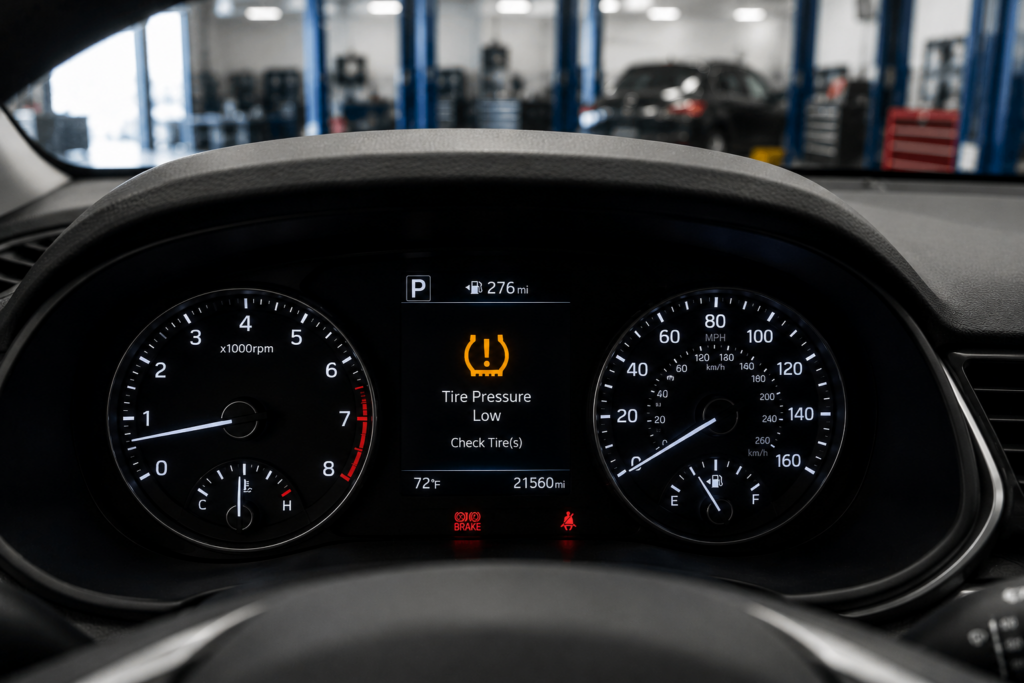
Tire pressure monitoring systems help drivers identify pressure changes before they become larger safety or performance concerns. As vehicles become more advanced and sensor dependent, TPMS problems are becoming more common in newer cars due to aging sensors, wheel service issues, calibration requirements, and electronic system complexity.
Why TPMS Problems Are Becoming More Common in Newer Cars
Modern vehicles rely heavily on electronic monitoring systems to track vehicle performance, safety, and maintenance conditions. One of the most common systems drivers interact with regularly is the tire pressure monitoring system, often called TPMS.
Most drivers recognize the TPMS warning light when it appears on the dashboard, but many do not fully understand how the system works or why warning lights sometimes stay on even after tires are inflated properly. As automotive technology evolves, TPMS systems are becoming more sophisticated, but also more sensitive to maintenance issues, sensor failures, and calibration problems.
If you already read our guide on dashboard warning lights and diagnostics, TPMS systems are another example of how modern vehicles increasingly depend on sensors and electronic monitoring.
How TPMS Works in Modern Vehicles
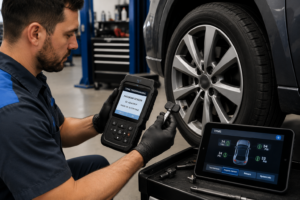 TPMS systems monitor air pressure inside the tires and alert drivers when pressure drops below recommended levels. Most modern vehicles use direct TPMS systems, which rely on sensors mounted inside each wheel.
These sensors measure tire pressure continuously and send information to the vehicle’s computer system. If pressure falls too low, the dashboard warning light activates to notify the driver.
Some vehicles also use indirect TPMS systems that rely on wheel speed sensors and ABS data rather than physical pressure sensors inside the tires. However, direct TPMS systems are now more common in newer vehicles.
Main TPMS components
- Tire pressure sensors inside the wheels
- Vehicle control module
- Dashboard warning indicators
- Wireless communication systems
- Calibration and relearn software
Why TPMS Issues Are Becoming More Common
One reason TPMS issues appear more often today is simply because newer vehicles use more electronic systems than older cars. Sensors now play a major role in maintenance monitoring, safety systems, and diagnostics.
TPMS sensors also contain small internal batteries. Over time, these batteries weaken and eventually fail. Since the sensor is mounted inside the wheel, replacement often requires removing the tire from the rim.
Wheel and tire service can also affect TPMS performance. Tire rotations, wheel replacements, aftermarket wheels, seasonal tire changes, or damaged valve stems may create sensor communication problems if calibration is not completed properly afterward.
This trend toward sensor based maintenance is similar to what we discussed in our article on software driven vehicle maintenance, where electronic systems now influence many aspects of vehicle service.
Common causes of TPMS problems
- Dead TPMS sensor batteries
- Damaged wheel sensors during tire service
- Calibration or relearn issues
- Cold weather pressure changes
- Corroded valve stems
- Communication faults between sensors and modules
Cold Weather Often Triggers TPMS Warnings
Temperature changes have a direct effect on tire pressure. When temperatures drop, tire pressure naturally decreases. During colder seasons, drivers may notice TPMS warning lights appearing more frequently in the morning or during sudden weather changes.
In many cases, the system is working correctly. The tires may simply need proper inflation to match manufacturer recommendations.
However, repeated warnings even after pressure adjustments may indicate a sensor issue or calibration concern rather than normal temperature related pressure changes.
TPMS and Tire Safety
TPMS systems are designed to improve safety by helping drivers identify underinflated tires earlier. Driving with incorrect tire pressure may affect handling, braking performance, tire wear, and fuel efficiency.
Low tire pressure may also increase heat buildup inside the tire, especially during long drives or hot weather conditions. That is one reason tire inspections remain important even when electronic monitoring systems are present.
Drivers preparing for longer trips may also benefit from our article on road trip vehicle preparation, since tire condition and inflation are important parts of overall vehicle readiness.
Aftermarket Wheels and TPMS Compatibility
Many drivers customize their vehicles with aftermarket wheels or seasonal tire sets. While these upgrades can change appearance or performance, they may also affect TPMS compatibility if the correct sensors are not installed.
Some aftermarket wheels require compatible sensors, additional programming, or relearn procedures after installation. If the system cannot communicate properly with the sensors, warning lights may remain active.
That is why proper installation and calibration are important whenever wheel or tire changes occur.
Wheel service situations that may require TPMS calibration
- Tire rotations
- Seasonal tire swaps
- Aftermarket wheel installation
- TPMS sensor replacement
- Alignment or suspension work affecting wheel systems
What Drivers Should Do When the TPMS Light Appears
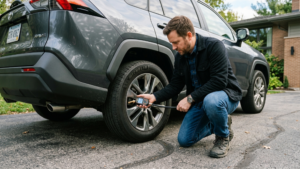 Drivers should avoid ignoring TPMS warning lights, even if the vehicle feels normal while driving. The first step is checking tire pressure manually using a reliable gauge and comparing the readings with the manufacturer recommendations found inside the driver side door frame.
If tire pressure is correct but the warning light remains active, the issue may involve sensor communication, calibration, or hardware failure.
Modern diagnostic tools often allow technicians to read individual sensor data, battery status, and communication signals to identify the source of the problem more accurately.
This reflects the larger trend discussed in our article on advanced vehicle diagnostics, where electronic monitoring systems now play a major role in modern maintenance.
Why Routine Tire Inspections Still Matter
Even with advanced monitoring systems, visual inspections and routine tire maintenance remain important. TPMS systems are useful tools, but they do not replace regular tire checks, tread inspections, or alignment monitoring.
Tire pressure can change gradually over time, and some tire related issues may not trigger immediate warnings. Drivers who inspect tires regularly often identify uneven wear, damage, or inflation problems earlier.
Final Thoughts
TPMS problems are becoming more common because modern vehicles depend more heavily on electronic sensors, communication systems, and digital diagnostics. While these systems improve convenience and safety, they also introduce additional maintenance considerations for drivers and repair shops.
Understanding how TPMS works, why warning lights appear, and when calibration or sensor replacement may be necessary helps drivers respond more confidently when issues develop.
Helpful references: NHTSA TPMS information, Consumer Reports TPMS guide, and Bridgestone tire pressure monitoring basics.