
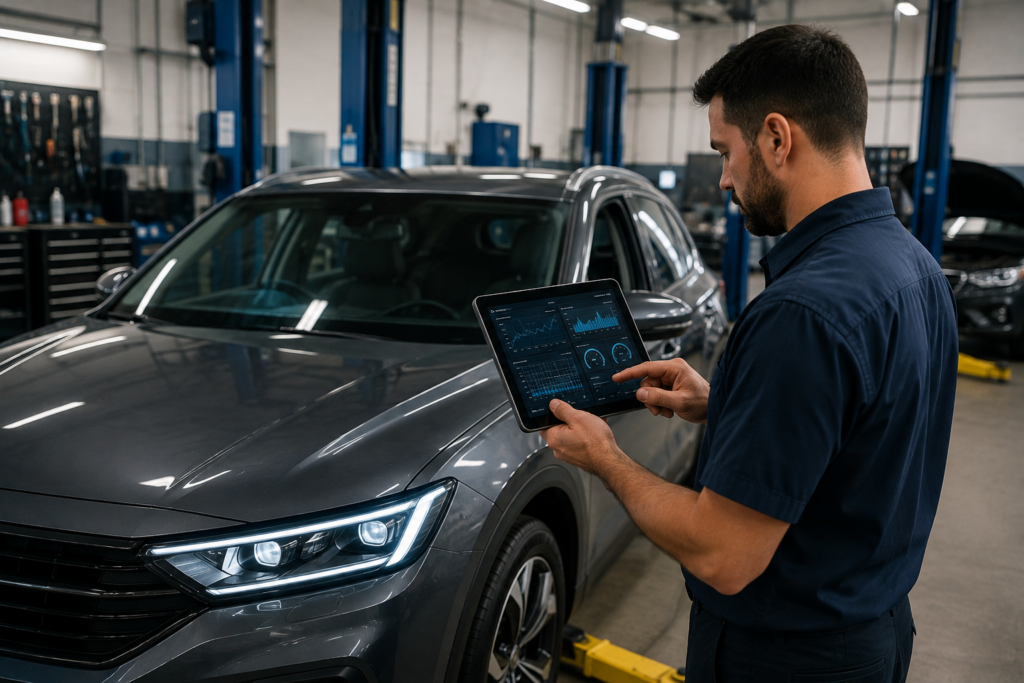
Cars are getting better at telling drivers when something may need attention before a complete failure occurs. Modern vehicles constantly monitor temperatures, pressures, electrical signals, battery condition, engine performance, braking activity, and many other operating parameters. Predictive car maintenance takes this information a step further by using vehicle data to recognize patterns that may indicate a developing problem.
Predictive Car Maintenance: How Your Vehicle Warns You Early
 Traditional vehicle maintenance has often been based on mileage, time, or obvious symptoms. Drivers change oil after a certain number of miles, replace worn tires after inspecting the tread, or visit a repair shop when a warning light appears. Those methods remain important, but newer vehicle technology is creating another approach.
Predictive maintenance uses information collected from a vehicle’s sensors and electronic control systems to help identify unusual behavior. Instead of waiting until a component fails completely, a modern vehicle may detect changes in temperature, voltage, pressure, vibration, efficiency, or other measurements that suggest attention may soon be needed.
This does not mean cars can predict every breakdown or replace a professional inspection. Instead, predictive technology gives drivers and technicians additional information that can support earlier and more accurate maintenance decisions.
This trend complements the growing role of digital technology in vehicle diagnostics and repair. As automobiles generate more operating data, technicians increasingly have more information available when investigating a developing problem.
How Predictive Car Maintenance Works
Most modern cars already contain dozens of sensors and electronic control modules. These systems monitor the engine, transmission, brakes, emissions equipment, battery, charging system, cooling system, tires, and safety features.
Traditional onboard diagnostics often react after a measurement crosses a particular threshold. For example, the computer may activate a warning light when it detects a fault that meets specific conditions. Predictive maintenance can go further by examining how measurements change over time.
A component does not always fail instantly. A cooling system may gradually run hotter. Battery voltage may become less stable. An electric motor may require slightly more energy than expected. Fuel efficiency may slowly decline. When enough information is available, these changes can reveal patterns that deserve further inspection.
Some connected vehicles can also send information to manufacturer platforms or mobile applications. Drivers may receive reminders or vehicle health reports without manually checking every system.
Vehicle information used for predictive maintenance may include:
- Engine temperature
- Oil pressure and oil-life information
- Battery voltage and charging performance
- Tire pressure
- Brake system measurements
- Fuel and energy efficiency
- Coolant temperature
- Sensor performance
- Diagnostic trouble codes
- Operating history and mileage
Recent automotive engineering research is exploring even more advanced approaches involving machine learning and vehicle telemetry. These systems can analyze large amounts of operating information and look for patterns associated with component deterioration.
How This Differs From a Dashboard Warning Light
A dashboard warning light is generally a notification that the vehicle has already detected a condition requiring attention. Predictive maintenance is intended to help recognize changes that may occur before a major failure becomes obvious.
That distinction is important. Predictive information should not cause drivers to ignore conventional warnings. If the check engine light, brake warning, temperature warning, oil pressure warning, or another important indicator appears, it should still be taken seriously.
Our guide on what to do when the check engine light comes on explains why diagnostic testing is important when a vehicle detects a fault.
Predictive technology simply adds another layer. Instead of only reporting an established problem, the system may help technicians see that something is gradually moving away from its normal operating pattern.
Vehicle Systems That Can Provide Early Warning Signs
Many vehicle systems can provide useful information before a major problem develops. One of the most familiar examples is the battery and charging system. A battery may still start the vehicle while its available capacity gradually declines. Monitoring voltage and charging behavior can sometimes reveal weakening performance before a no-start situation occurs.
Cooling systems are another example. Temperature sensors continuously monitor operating conditions. Changes in temperature patterns may help indicate cooling system concerns that deserve investigation.
Engine management systems provide even more information. Modern vehicles monitor airflow, fuel delivery, oxygen levels, ignition performance, emissions, and many other variables. A technician can use scan data to understand how these systems are behaving rather than simply replacing parts based on symptoms.
Tires are increasingly monitored electronically as well. Tire pressure monitoring systems can alert drivers when inflation becomes significantly low. Although TPMS does not replace routine tire inspections, it demonstrates how onboard monitoring can alert drivers before a problem becomes more serious.
Hybrid and electric vehicles create additional opportunities for vehicle health monitoring because they depend heavily on electronic systems. Battery temperatures, charge levels, energy consumption, cooling performance, and electric drive components can generate large amounts of diagnostic information.
Systems commonly monitored in newer vehicles include:
- Engine and emissions systems
- Automatic transmissions
- Starting and charging systems
- Hybrid and EV batteries
- Cooling systems
- Brake and stability-control systems
- Tire pressure systems
- Advanced driver assistance systems
Why Predictive Maintenance Can Help Drivers
 The most obvious potential benefit is earlier awareness. Unexpected breakdowns are inconvenient and can leave drivers dealing with towing, missed appointments, or emergency repairs. Recognizing unusual vehicle behavior earlier may provide more time to schedule an inspection.
Early diagnosis can also help technicians investigate a problem while the vehicle is still operating. Historical information and live measurements may reveal patterns that are difficult to identify after a component fails completely.
Predictive maintenance may also help reduce unnecessary parts replacement. A modern scan tool can provide information about how different vehicle systems are performing. Instead of assuming that one component is responsible for a symptom, technicians can examine available data and conduct appropriate tests.
This is one reason professional diagnostics have become increasingly important. Modern cars contain interconnected electronic systems, meaning a symptom in one area may sometimes originate somewhere else.
Predictive Maintenance Does Not Replace Routine Service
One important misconception is that smarter cars need less attention. Predictive technology can provide useful information, but basic vehicle maintenance remains essential.
Engine oil still becomes contaminated and loses effectiveness. Tires still wear. Brake pads still become thinner. Coolant, filters, belts, hoses, suspension components, and other physical parts still require inspection and service.
A vehicle computer can provide information, but it cannot physically inspect a cracked belt, identify every small fluid leak, measure tire tread exactly, or determine the condition of every mechanical component without additional testing.
For drivers planning longer trips, combining electronic monitoring with conventional inspection is especially helpful. Our road trip preparation guide covers several physical checks that remain important regardless of how advanced a vehicle becomes.
The Role of Professional Diagnostic Equipment
A basic code reader can retrieve certain diagnostic trouble codes, but modern automotive diagnostics can involve considerably more information. Professional scan tools may allow technicians to examine live data, compare sensor measurements, activate components for testing, inspect module communication, and evaluate system performance.
This matters because a trouble code does not always identify the exact part that should be replaced. It generally identifies a circuit, measurement, or condition the vehicle computer considers abnormal.
For example, an abnormal sensor reading could result from the sensor itself, damaged wiring, a vacuum leak, another failing component, or an actual mechanical problem. Testing helps determine the cause.
Choosing a repair facility with modern diagnostic capabilities is therefore increasingly important. Our article explaining why choosing the right auto repair shop matters discusses how proper equipment and experience can affect vehicle care.
What Drivers Should Do With Predictive Maintenance Alerts
If your vehicle or manufacturer application sends a maintenance alert, begin by reading exactly what it says. Not every notification means the vehicle must immediately stop operating. Some are routine reminders, while others indicate that a system has identified an unusual condition.
Check the owner’s manual for information about the alert and determine whether the manufacturer provides specific instructions. If the vehicle displays a serious safety, oil-pressure, braking, overheating, or electrical warning, do not treat it as an ordinary maintenance reminder.
It can also be useful to record changes in vehicle behavior. Note when a warning first appeared, whether it occurs during startup or driving, and whether you notice changes in sound, vibration, temperature, performance, fuel economy, or charging behavior.
This information gives a technician more context when diagnosing the vehicle.
When a vehicle sends an early maintenance alert:
- Read the complete message rather than dismissing it.
- Check the owner’s manual for manufacturer guidance.
- Notice any new sounds, smells, vibrations, or performance changes.
- Keep track of when the warning appears.
- Avoid clearing diagnostic codes before an inspection if possible.
- Schedule diagnostic testing when the alert persists or performance changes.
How AI Is Changing Vehicle Diagnostics
Artificial intelligence and machine learning are beginning to play a larger role in automotive engineering. Instead of relying exclusively on predetermined limits, machine-learning systems can analyze patterns across large amounts of vehicle data.
SAE International research published in 2026 describes predictive-maintenance systems that analyze information such as engine load, braking data, temperatures, pressures, electrical measurements, and other operating signals. Researchers are also studying fleet telemetry to identify early signs of component deterioration.
For drivers, the practical result may eventually be more useful vehicle-health notifications and better information for technicians before a vehicle arrives at the shop.
For additional technical information, see SAE International’s 2026 research on predictive vehicle maintenance and SAE research on predictive maintenance using fleet telemetry.
Do Older Vehicles Have Predictive Maintenance Features?
Predictive maintenance is most advanced in newer connected vehicles, but older vehicles still provide useful diagnostic information. OBD-II systems have been standard on U.S. passenger vehicles for decades, allowing technicians to retrieve diagnostic trouble codes and examine certain operating information.
The difference is primarily the amount of data and how it is used. Newer vehicles generally contain more sensors, more electronic modules, faster networks, and greater software integration. Some can also transmit information remotely or display vehicle health information through smartphone applications.
Even without advanced predictive technology, drivers of older vehicles can benefit from regular inspections and professional diagnostics when performance changes.
Final Thoughts
Predictive car maintenance represents an important evolution in automotive service. Instead of relying only on fixed mileage intervals or waiting for obvious failures, vehicles are becoming increasingly capable of monitoring their own condition and identifying unusual operating patterns.
That does not eliminate traditional maintenance or professional diagnosis. Tires still need inspection, fluids still need attention, mechanical components still wear, and electronic warnings still require proper testing. What predictive technology provides is another source of information.
Drivers who combine regular maintenance with attention to vehicle health alerts can make better-informed service decisions. As sensors, connected systems, and machine learning continue to develop, cars may become increasingly effective at telling us not only that something has gone wrong, but that something may be starting to go wrong.