
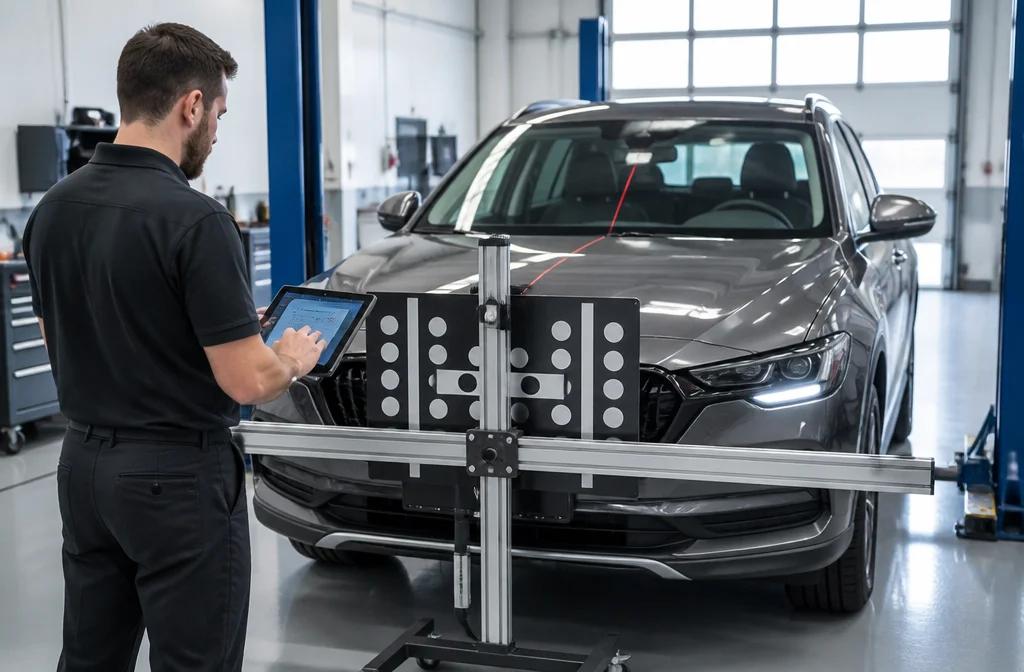
Replacing a windshield used to be a relatively straightforward auto glass repair. Today, many vehicles have forward-facing cameras mounted behind the windshield that support advanced driver assistance systems. As a result, replacing damaged glass may also require ADAS windshield calibration to help ensure important safety features operate as intended.
ADAS Windshield Replacement: Why Camera Calibration Matters
 Modern vehicles increasingly rely on cameras, radar, and electronic control systems to help drivers recognize hazards and maintain awareness of surrounding traffic. Features such as lane departure warning, lane keeping assistance, automatic emergency braking, and adaptive cruise control may depend partly on information collected by a camera positioned near the rearview mirror.
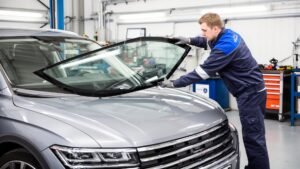
When a windshield is replaced, the camera may need to be removed, reinstalled, inspected, or recalibrated. Even if the camera itself remains undamaged, its position relative to the road can be affected by the replacement process.
That is why drivers should consider more than the price of replacement glass. Proper installation, compatible materials, camera alignment, and manufacturer-required calibration are all important parts of the repair.
How Windshield Cameras Support Driver Assistance
A forward-facing camera observes the roadway through the windshield. Depending on the vehicle, its images may help electronic systems identify lane markings, vehicles, pedestrians, traffic signs, and other relevant features.
Software processes the camera information and may combine it with data from radar, wheel-speed sensors, steering sensors, and other electronic components.
These systems can then provide warnings or assistance under certain operating conditions. For example, lane departure warning may alert a driver when the vehicle appears to leave its lane unintentionally.
Automatic emergency braking may warn the driver or apply braking when the system detects a potential collision, depending on vehicle capabilities.
The I-CAR explanation of advanced driver assistance systems describes how cameras and sensors support these technologies and why calibration matters after certain repairs.
Although ADAS features can improve safety, they remain driver-assistance technologies. Drivers must continue watching the road and operating the vehicle responsibly.
Why Windshield Replacement Can Affect Camera Alignment
Forward-facing cameras are designed to observe the road from a particular mounting position. Their operation depends on the relationship between the camera, windshield, vehicle body, and roadway.
Replacing the windshield may involve removing the camera assembly or disturbing its mounting bracket. Even when the replacement glass looks identical, differences in positioning or installation can affect the camera’s view.
Some manufacturers specify particular windshield materials, optical characteristics, mounting components, and installation procedures.
These requirements matter because the camera must observe the roadway through the glass. Distortion, incorrect mounting, or an unsuitable camera viewing area may interfere with performance.
The AAA windshield repair and replacement guide explains that vehicles equipped with windshield-mounted ADAS cameras may require specific replacement glass and calibration after installation.
What Is ADAS Windshield Calibration?
ADAS windshield calibration is a procedure used to establish or verify the correct alignment and operation of a camera after a repair or replacement.
The exact process depends on the vehicle manufacturer, model, equipment, and safety systems involved.
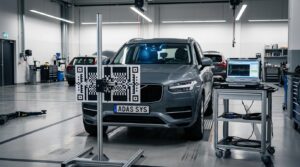
Calibration may involve positioning specialized targets in front of the vehicle, connecting a diagnostic scan tool, following a prescribed driving procedure, or completing a combination of these steps.
The purpose is to help the camera and associated control systems interpret the roadway according to manufacturer specifications.
Calibration is not the same as simply clearing a warning light. A complete procedure may require inspections, measurements, diagnostic testing, and confirmation that the system has successfully completed its required adjustments.
Static and Dynamic ADAS Calibration Explained
Two common approaches are static calibration and dynamic calibration. Some vehicles require one method, while others require both.
Static Calibration
Static calibration generally takes place while the vehicle is stationary. Technicians use manufacturer-specified targets, measuring equipment, and diagnostic procedures to establish the correct camera alignment.
The setup may require a level surface, specific distances, appropriate lighting, correct tire pressures, and precise target positioning.
Dynamic Calibration
Dynamic calibration involves driving the vehicle under conditions specified by the manufacturer. The camera observes roadway features while the vehicle’s electronic systems perform the necessary learning or adjustment process.
Successful dynamic calibration may depend on suitable road markings, speed, visibility, weather, and traffic conditions.
Technicians must follow the applicable procedure rather than choosing a method based on convenience.
The I-CAR calibration guidance for windshield replacement explains how repair professionals identify vehicle-specific requirements.
Does Every Windshield Replacement Require Calibration?
Not every vehicle has a windshield-mounted ADAS camera, and calibration requirements differ among manufacturers and models.
However, many vehicles equipped with forward-facing cameras require calibration after windshield replacement, even when no warning light appears.
For example, manufacturer service information published through the National Highway Traffic Safety Administration’s technical service bulletin database describes specific camera inspection and adjustment procedures after windshield replacement on certain Subaru vehicles.
The safest approach is to check the manufacturer’s repair instructions for the exact year, make, model, and installed equipment.
A repair facility should be able to explain whether calibration is required and how that determination was made.
Can ADAS Work Without Proper Calibration?
A vehicle may appear to operate normally even when a camera requires calibration. The absence of a dashboard warning does not necessarily confirm that every driver-assistance feature is correctly aligned.
In some cases, a camera may detect objects or lane markings but interpret their position incorrectly. In other cases, the system may disable certain features or display warning messages.
Possible consequences depend on the particular system and the nature of the alignment problem.
Drivers should not assume that a short test drive or the absence of warning lights proves that a manufacturer-required calibration can be skipped.
This is also why a complete diagnostic process matters. Our article on ADAS calibration and safety systems service provides additional background on modern driver-assistance maintenance.
OEM Glass Versus Aftermarket Windshields
Drivers often encounter a choice between original equipment manufacturer glass and aftermarket replacement glass.
OEM glass is supplied according to the vehicle manufacturer’s specifications. Aftermarket glass may come from another supplier and can vary in design, materials, and compatibility.
Not every aftermarket windshield is unsuitable, but some manufacturers have specific requirements or restrictions for vehicles equipped with camera-based safety systems.
For example, certain vehicle manufacturers require approved glass or specific optical and mounting characteristics to support ADAS operation.
The I-CAR summary of General Motors glass replacement requirements discusses manufacturer concerns involving windshield specifications and camera calibration.
Before approving replacement glass, drivers should ask whether it meets the applicable manufacturer requirements for their vehicle.
How Much Does Windshield Camera Calibration Cost?
Calibration costs vary depending on the vehicle, camera system, repair facility, equipment requirements, and the procedures involved.
Some vehicles require a relatively straightforward calibration, while others involve multiple electronic systems or additional diagnostic work.
In a December 2023 study, AAA examined ADAS repair costs for several vehicles and identified additional expenses associated with transferring and calibrating windshield-mounted cameras.
The AAA ADAS repair cost fact sheet provides examples of how calibration contributes to repair expenses.
These figures are historical examples rather than universal prices. Actual costs depend on the specific vehicle and service provider.
Drivers should request an estimate that identifies windshield replacement, calibration, and any necessary diagnostic work.
What Drivers Should Ask After Windshield Replacement
After replacing a windshield, drivers should confirm whether their vehicle has camera-based safety features and whether the manufacturer requires calibration.
It is also useful to understand who performs the calibration. Some auto glass companies have the equipment and training to complete the procedure, while others coordinate with a specialized repair facility.
Questions worth asking include:
- Does my vehicle require camera calibration after windshield replacement?
- Was the replacement glass approved for my vehicle’s ADAS equipment?
- Will calibration follow the manufacturer’s service procedure?
- Is static, dynamic, or combined calibration required?
- Who will perform the calibration?
- Will diagnostic testing be completed afterward?
- Can I receive documentation showing the procedure was completed?
- Are there any temporary limitations on the safety features?
Drivers should also follow the glass installer’s instructions about adhesive curing and safe drive-away time.
Warning Signs After Windshield Replacement
Some calibration or installation problems may produce noticeable symptoms. Others may not be immediately apparent.
Drivers should pay attention to unexpected warnings or changes in driver-assistance behavior after windshield service.
Possible warning signs include:
- Lane departure warning messages
- Camera unavailable notifications
- Automatic emergency braking warnings
- Adaptive cruise control becoming unavailable
- Unusual lane keeping assistance behavior
- Persistent camera or sensor fault codes
- Visible camera mounting problems
These symptoms do not automatically mean the windshield was installed incorrectly. Weather, blocked sensors, electrical problems, or unrelated faults can also affect ADAS performance.
A qualified technician should investigate the actual cause rather than assuming that the camera itself needs replacement.
For additional guidance about dashboard alerts, see our article on what to do when vehicle warning lights appear.
Other Repairs That May Require ADAS Calibration
 Windshield replacement is not the only repair that can affect driver-assistance alignment.
Depending on manufacturer requirements, calibration may also be necessary after certain collision repairs, camera replacements, suspension work, steering repairs, or changes affecting sensor mounting positions.
Some systems may require checks after wheel alignment or other procedures that influence vehicle geometry.
However, requirements vary by vehicle. Not every repair automatically requires every ADAS sensor to be recalibrated.
The I-CAR guide to OEM calibration requirements explains why technicians must consult vehicle-specific repair information.
Keeping Windshield Cameras Working Properly
Drivers can support camera performance by keeping the windshield clean and maintaining a clear view through the camera’s operating area.
Dirt, ice, snow, condensation, stickers, and certain window films can interfere with visibility.
Drivers should avoid placing accessories or decorations in front of the camera and follow manufacturer guidance for windshield cleaning and glass repairs.
When a windshield chip or crack appears near the camera’s viewing area, it should be evaluated promptly. Some damage in that location may require replacement rather than a conventional chip repair.
The I-CAR discussion of obstructed ADAS cameras explains how windshield conditions can affect camera-based safety systems.
Why Professional Diagnosis Matters
Modern automotive repairs increasingly require a combination of mechanical knowledge, electronic diagnostics, and precise calibration procedures.
A technician may need to inspect camera mounting, check fault codes, verify software status, examine sensor communication, and complete manufacturer-required calibration.
Replacing parts without identifying the underlying problem can lead to unnecessary expenses or unresolved warnings.
That is why choosing a repair facility with suitable diagnostic equipment and experience matters. Our article on choosing the right auto repair shop discusses the importance of qualified automotive service.
Final Thoughts
Windshield replacement has become more complicated as modern vehicles incorporate cameras and advanced driver-assistance systems.
For vehicles equipped with forward-facing cameras, proper glass selection, installation, and calibration can be important to the operation of lane assistance, collision warning, and other safety features.
Drivers should not assume that a windshield replacement is complete simply because the new glass looks correct and no dashboard warning appears.
The best approach is to verify the manufacturer’s requirements, choose qualified service providers, and confirm that any necessary calibration has been completed successfully.
Understanding ADAS windshield calibration helps drivers make informed repair decisions and maintain the safety technology built into their vehicles.