
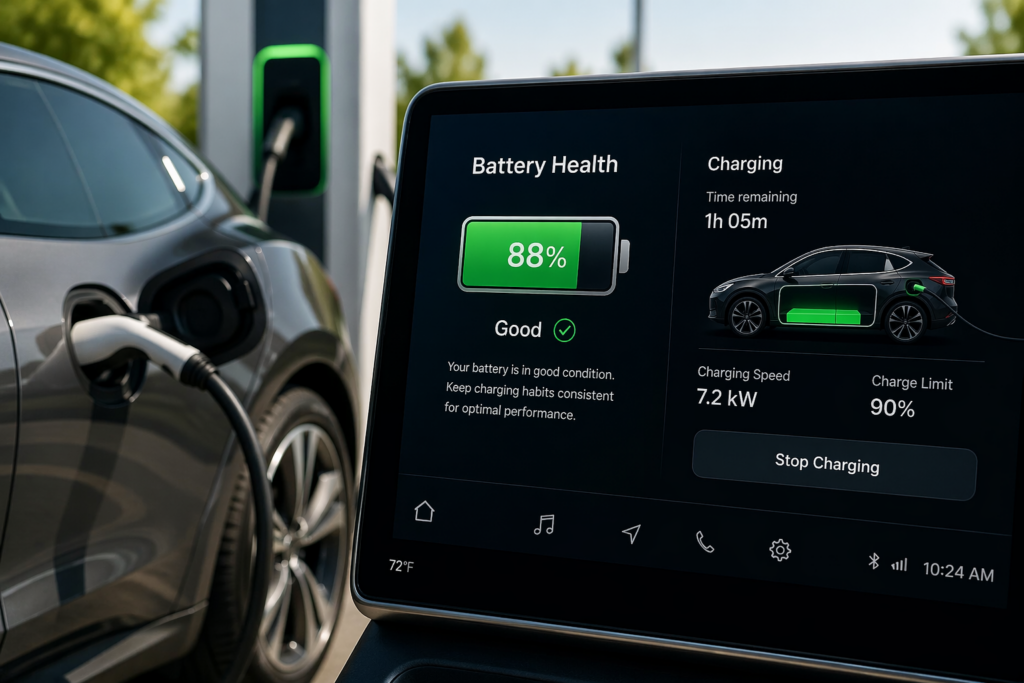
EV battery health affects how far your vehicle can travel, how efficiently it charges, and how consistently it performs over time. Unlike traditional gas powered vehicles that rely on fuel combustion and routine engine service, electric vehicles depend on a large battery pack and a network of systems that manage energy use. That makes battery condition one of the most important parts of EV ownership.
EV Battery Health Explained for Everyday Drivers
Electric vehicles are becoming a normal part of daily life, and more drivers are asking practical questions about range, charging, battery lifespan, and long term maintenance. These are reasonable concerns. The battery is one of the most important components in an EV, and its condition affects everything from efficiency to convenience on the road.
Many drivers are familiar with the small 12 volt battery found in traditional vehicles, but EV battery systems are much more advanced. They store far more energy, work with high voltage components, and rely on software, cooling systems, and battery management controls to operate safely. Because of that, battery care in an EV is not just about plugging in when the charge is low. It also involves understanding how daily habits, climate, charging patterns, and vehicle software can affect long term performance.
If you already have a solid understanding of general vehicle care from our guide on regular maintenance basics, EV ownership adds a different layer of awareness. Instead of focusing heavily on oil changes and engine wear, drivers pay more attention to battery efficiency, thermal management, charging behavior, and electronic system monitoring.
What EV Battery Health Really Means
Battery health refers to how closely the battery performs compared to when it was new. Over time, all EV batteries gradually lose some of their original storage capacity. This process is known as degradation. It happens slowly, and in most cases it is a normal part of long term use rather than a sign that something is wrong.
As battery health changes, the most noticeable effect for many drivers is reduced driving range. A vehicle that once delivered a certain number of miles on a full charge may later travel slightly less under similar conditions. That does not mean the battery has failed. It usually means the battery is aging in a normal way, much like any component that experiences wear over time.
Battery health also affects charging behavior, energy efficiency, and how the vehicle estimates remaining range. In a healthy system, the vehicle should charge in a stable way, maintain consistent energy use, and provide predictable performance. When health declines more noticeably, drivers may see longer charging times, a greater drop in estimated range, or less consistency during daily driving.
Key factors that define battery health
- Total energy capacity compared to original levels
- Charging speed and charging consistency
- Thermal stability during use and charging
- Accuracy of range estimates over time
- How well the battery management system regulates performance
What Affects EV Battery Health
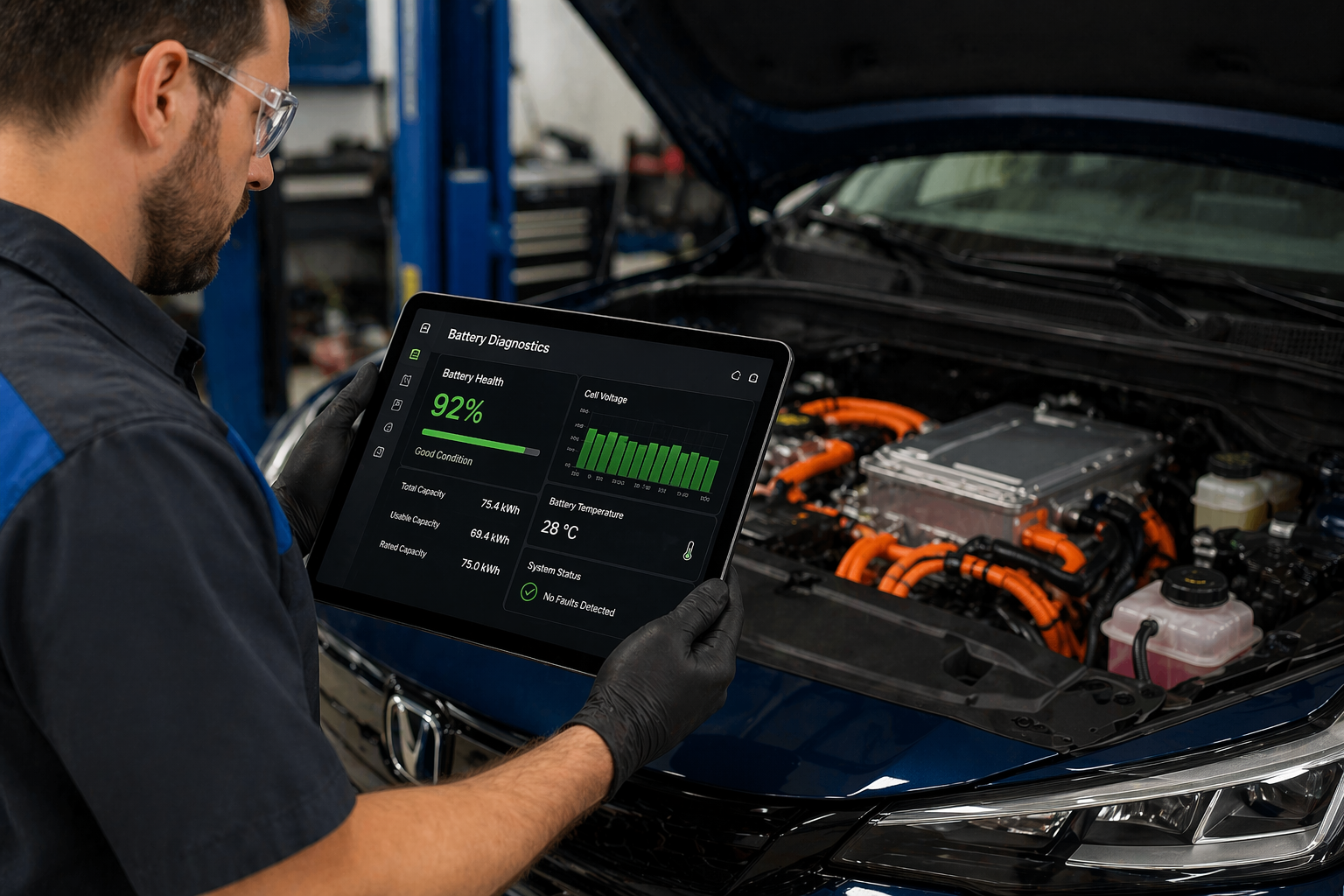
Several factors influence how quickly an EV battery degrades. Temperature is one of the biggest. High heat can place stress on battery cells, especially during charging or long periods of heavy use. Cold weather can also affect performance, though it often reduces range temporarily rather than permanently damaging the battery in the same way heat can.
Driving style also matters. Frequent hard acceleration, repeated fast highway driving, towing heavy loads, or driving in very demanding conditions can increase energy demand and create more heat. Over time, that repeated stress may affect long term battery condition.
Charging habits are another major factor. While fast charging is convenient, using it constantly may create more heat than slower charging methods. That does not mean drivers should avoid fast charging completely. It simply means balance matters. Fast charging works well when needed, but many owners benefit from using standard charging more often for routine daily use.
Software plays an important role too. Modern EVs rely on battery management systems that monitor charge levels, temperature, energy flow, and cell balance. These systems help protect the battery during charging and driving. In many ways, this connects with the same shift toward intelligent system monitoring discussed in our article on vehicle diagnostics and system monitoring.
Main influences on battery condition
- Frequent exposure to high temperatures
- Constant reliance on fast charging
- Regularly draining the battery to very low levels
- Leaving the battery at full charge for long periods
- Heavy driving loads and aggressive acceleration
- Software or system issues that affect charging management
Charging Habits That Influence Battery Life
Charging routines can have a direct effect on battery health. One of the most practical habits for EV owners is treating charging as a regular routine rather than a last minute response to a nearly empty battery. Consistent charging often supports more stable performance and reduces the stress of deep discharges.
For many drivers, home charging or slower daily charging may be a practical option. This approach tends to produce less heat and fits naturally into everyday ownership. Fast charging remains useful, especially during road trips or busy schedules, but relying on it every day may place more stress on the system over time.
Another factor is how full the battery stays for extended periods. Constantly charging to maximum capacity and letting the car sit at that level for long stretches may not be ideal for long term battery condition. Many drivers prefer moderate charge levels for everyday commuting and reserve full charging for longer trips when the extra range is needed.
This reflects a broader truth about modern automotive care. Battery health often improves through balanced habits rather than extreme ones. Similar to how electronic systems need calibration and support, EV batteries benefit from steady, predictable use. That is also why readers who are interested in modern automotive systems may want to review our post on advanced vehicle systems.
Practical charging habits for everyday drivers
- Use fast charging when it makes sense, not as the only charging method
- Avoid making near zero battery levels a daily routine
- Be thoughtful about leaving the battery at full charge for extended periods
- Charge in shaded or moderate temperature areas when possible
- Pay attention to changes in charging speed or charging behavior
Why Temperature Matters So Much
Temperature affects nearly every aspect of battery performance. In hot weather, the battery management system may work harder to cool the pack during charging and operation. Repeated heat exposure can contribute to long term wear, especially when combined with frequent fast charging or heavy driving loads.
Cold weather creates a different type of challenge. Drivers often notice reduced range in winter because the battery is less efficient in low temperatures, and the vehicle may also use energy for cabin heating and battery conditioning. In many cases, this drop in range is temporary. Once conditions warm up, performance often becomes more normal again.
Because of this, battery health should be viewed over time rather than judged from one cold week or one unusually hot season. A short term drop in efficiency does not always mean the battery is degrading faster than expected.
Signs Your EV Battery Needs Attention
Most EV batteries are built for long term use, and many drivers may never experience a serious battery problem during normal ownership. Still, it helps to recognize signs that something may need inspection. Changes often appear gradually, which is why paying attention to patterns can be more useful than reacting to a single unusual reading.
A slow decline in range is expected over the years. What deserves more attention is a sudden or unusual change. If range drops much faster than normal, charging behavior changes sharply, or warning messages begin appearing, the vehicle may need a diagnostic review.
Common warning signs
- A noticeable drop in range over a short period
- Charging takes much longer than expected
- Battery percentage falls unusually quickly during normal driving
- Unexpected dashboard warnings or error messages
- Inconsistent range estimates from day to day under similar conditions
- Reduced charging acceptance at normal stations
If warning lights or system messages appear, it may help to revisit our guide on dashboard warning indicators. While EVs do not operate exactly like gas vehicles, the same principle applies: warning messages are easier to deal with when they are not ignored.
How EV Maintenance Differs From Gas Vehicles
One reason many people are drawn to electric vehicles is that they have fewer moving parts than internal combustion vehicles. There are no oil changes, no spark plugs, and fewer engine related wear items. That can reduce some routine maintenance demands, but it does not mean maintenance goes away.
Instead, the focus shifts. EV maintenance often centers on battery performance, tire condition, brakes, cooling systems, software updates, and electronic diagnostics. This means the ownership experience changes, but it still requires attention. Drivers may spend less time thinking about engine service and more time monitoring charging habits, energy use, and system updates.
This shift also fits with the larger trend toward software driven vehicle care. If you have already read our article on software driven maintenance, EVs are one of the clearest examples of how digital systems now shape real world service decisions.
Key differences between EVs and gas vehicles
- Less engine related service but more battery and software awareness
- Fewer fluid based maintenance tasks in daily ownership
- More dependence on thermal management and diagnostics
- Greater importance placed on range, charging, and energy efficiency
Simple Ways to Support Battery Health
Drivers do not need a complicated routine to support battery condition. In fact, the most useful approach is often the simplest one. Pay attention to how the vehicle normally behaves, charge it in a steady way that fits your routine, and take note when something changes.
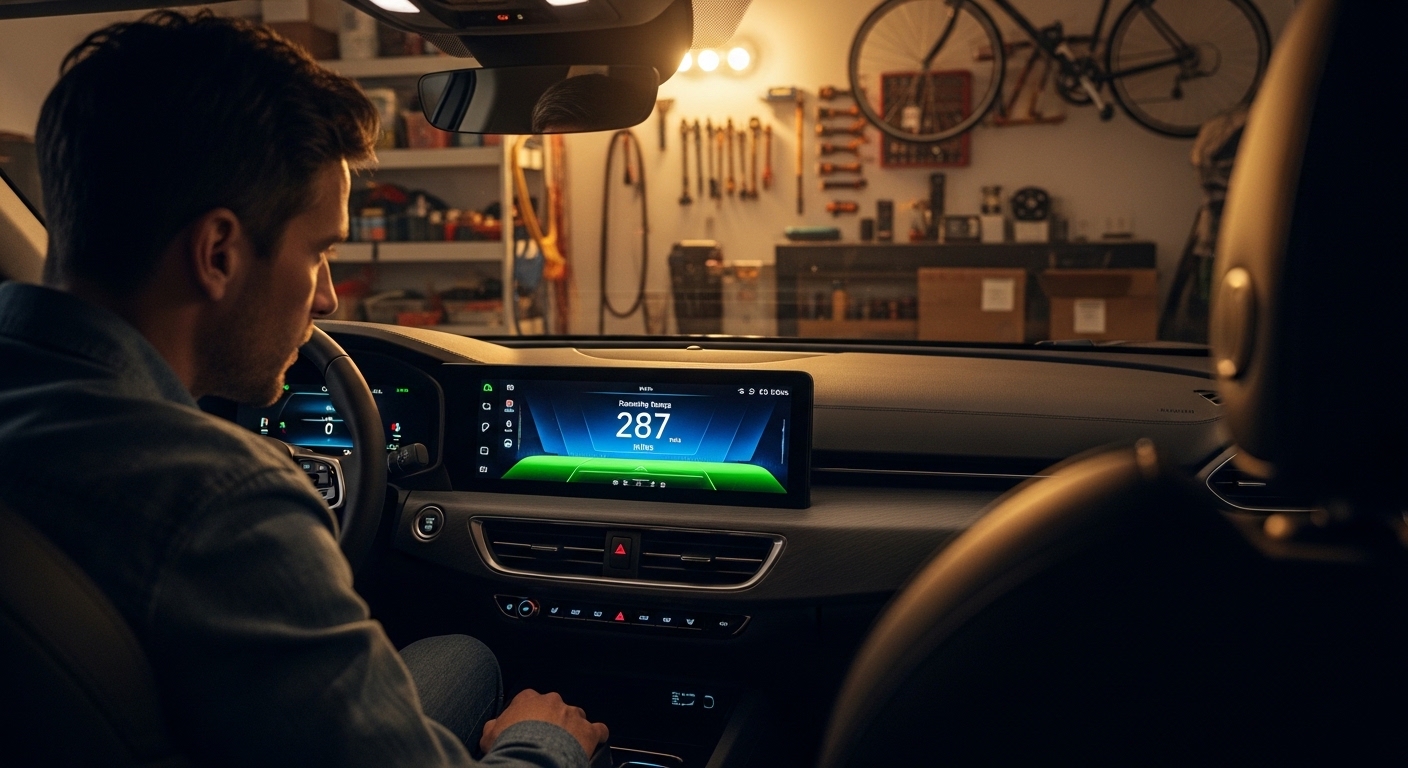
Monitoring range trends, watching how quickly the battery charges, and staying aware of software notifications may all help drivers catch issues earlier. Tire pressure also matters more than some people realize, because low tire pressure can reduce efficiency and make range seem worse than it should be.
It also helps to stay consistent with the parts of maintenance that still matter in any vehicle, such as tire care, brake checks, fluid monitoring where applicable, and seasonal preparation. Our road trip preparation guide remains useful because even the most advanced vehicle still depends on basic readiness.
Helpful habits for EV owners
- Monitor battery range and charging patterns over time
- Keep software updated when notifications appear
- Use fast charging strategically rather than automatically
- Check tire pressure regularly to support efficiency
- Schedule service if charging or range changes suddenly
- Stay aware of how climate affects real world performance
Final Thoughts
EV battery health plays a major role in performance, convenience, and long term ownership satisfaction. While some gradual degradation is normal, daily habits can influence how quickly those changes happen and how noticeable they become. The good news is that many of the most useful battery care habits are practical and easy to follow.
By understanding what battery health means, what affects it, and which warning signs deserve attention, drivers can make more informed decisions about charging and maintenance. Electric vehicles may operate differently from traditional cars, but the goal stays the same: keeping the vehicle dependable, efficient, and ready for everyday use. Helpful references: visit IEA global EV outlook