
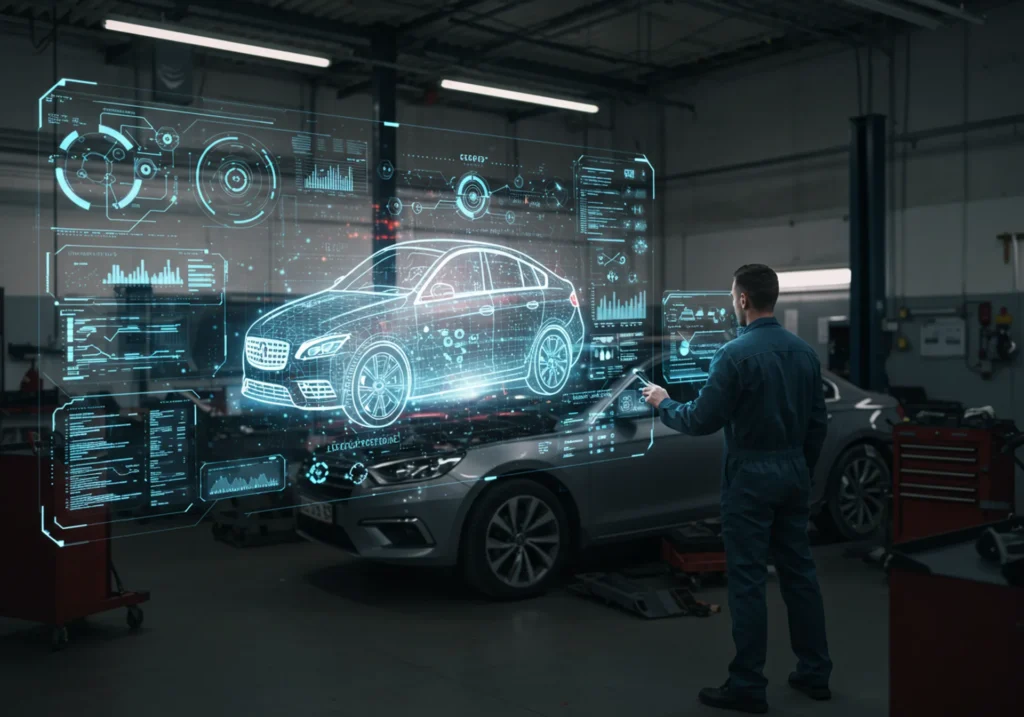
The automotive repair industry is experiencing rapid transformation. One of the most powerful tools driving change is the concept of the digital twin — a virtual replica of a physical vehicle, system, or component. Digital twins are used to mirror real-time performance, track wear, predict failures, and test repair strategies before technicians even touch the car. This technology is reshaping diagnostics, repair efficiency, and long-term maintenance planning.
What Is a Digital Twin?

A digital twin is a dynamic, data-driven model that represents the real-world performance of a physical object. In automotive contexts, it can replicate a single component such as an engine, or even the entire vehicle. The twin is updated continuously using sensor data, historical maintenance logs, and manufacturer specifications.
According to IBM, digital twins allow businesses to run simulations, analyze performance, and make data-backed decisions. For repair shops, this means the ability to predict faults and optimize repair strategies with unprecedented precision.
How Digital Twins Support Diagnostics
Traditional diagnostics rely on scan tools, fault codes, and technician experience. While effective, these approaches can be time-consuming and occasionally inconclusive, especially for intermittent faults. Digital twins take diagnostics to the next level by:
- Providing real-time monitoring: Sensors stream live data into the twin, offering a continuous picture of system health.
- Simulating failures: The twin can be used to replicate conditions and identify how and when a fault occurs.
- Predictive alerts: Instead of waiting for a fault code, the twin predicts failures before they happen.
- Historical data integration: Maintenance history is built into the model, allowing shops to connect current issues with past problems.
Benefits for Repair Shops
For independent and dealership shops alike, adopting digital twin technology provides several clear advantages:
- Faster Diagnosis: Less trial and error — technicians can pinpoint issues more accurately.
- Cost Efficiency: Reduced unnecessary part replacements by validating issues virtually first.
- Enhanced Customer Trust: Clear, data-backed explanations for repairs build transparency with clients.
- Technician Training: New staff can use digital twins as a teaching tool, learning how systems behave without risking damage to actual vehicles.
Examples in Automotive Use
Automakers and advanced shops are already experimenting with digital twin technology. For instance:
- Engines: Digital twins model combustion processes and wear to identify performance dips.
- EV Batteries: Twins track thermal cycles, charging patterns, and degradation for better battery management.
- ADAS Systems: Simulations help validate sensor calibration and predict how radar and cameras respond to conditions.
This level of detail helps shops service not just traditional combustion vehicles, but also hybrids and EVs — markets that require high-tech solutions.
Integration with Predictive Maintenance
One of the most valuable roles digital twins play is in predictive maintenance. Instead of waiting for a breakdown, a shop can use twin data to schedule service at the optimal moment. Benefits include:
- Reduced downtime for fleet customers
- Prolonged lifespan of parts and systems
- Lower long-term repair costs for vehicle owners
- Improved shop efficiency with proactive scheduling
Challenges and Considerations
Despite the benefits, adoption is not without hurdles. Repair shops must address:
- Technology Investment: Hardware, software, and training come at an upfront cost.
- Data Security: Streaming vehicle data must be protected against breaches.
- OEM Access: Some manufacturers restrict access to sensor data, limiting independent shop use.
- Standardization: Lack of universal platforms across vehicle brands may complicate integration.
Preparing Your Shop for Digital Twins
Shops interested in leveraging digital twins can begin with these steps:
- Invest in advanced diagnostic tools that support digital twin integration.
- Train technicians on data interpretation and simulation use cases.
- Collaborate with OEM programs that provide access to twin platforms.
- Adopt hybrid workflows — use digital twins alongside traditional methods until staff are confident.
Looking Ahead
The future of automotive repair is increasingly digital. As cars become more software-defined, digital twins will likely become standard practice. Shops that embrace this shift early can offer advanced diagnostics, attract high-tech customers, and stay competitive in an industry where innovation is moving fast.
Conclusion
Digital twins are not just a buzzword — they are a powerful diagnostic and repair tool reshaping the way automotive shops work. From predicting failures to improving technician training, their role in vehicle diagnostics and repair is only growing. By adopting digital twin technology, MikeGolinAutomotive can lead in accuracy, efficiency, and customer trust, setting a new standard for modern auto service.