
What Is ADAS and Why Does It Matter?
Modern vehicles are equipped with sophisticated safety technology that goes far beyond traditional features like seat belts and airbags. Advanced Driver Assistance Systems — commonly known as ADAS — represent a collection of electronic systems designed to help drivers avoid accidents and navigate roads more safely. These features have become standard equipment on most vehicles manufactured since 2016, and they rely on an intricate network of cameras, sensors, and radar units to function properly.
Common ADAS features include lane departure warning, automatic emergency braking, adaptive cruise control, blind spot monitoring, forward collision warning, and pedestrian detection. According to the National Highway Traffic Safety Administration, these technologies have proven effective at reducing certain types of crashes when they function as designed. However, the key phrase here is “when they function as designed” — and that is where ADAS calibration becomes critical.
How ADAS Systems Work in Your Vehicle
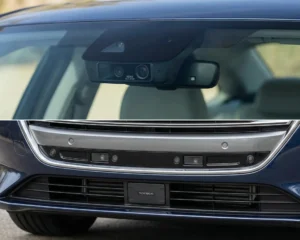
The cameras and sensors that power your vehicle’s safety systems are precision instruments. A forward-facing camera mounted behind your windshield monitors lane markings, reads traffic signs, and detects obstacles ahead. Radar sensors embedded in your bumpers measure the distance and speed of surrounding vehicles. Side cameras and sensors track blind spots and alert you to approaching traffic during lane changes.
These components work together as an integrated system, constantly communicating with your vehicle’s computer to make split-second decisions. When a pedestrian steps into your path, the forward camera detects them, the computer calculates the risk, and automatic emergency braking engages — all within fractions of a second. This level of precision requires every component to be perfectly aligned and calibrated to manufacturer specifications.
When Does Your Vehicle Need ADAS Calibration?
Several common repair and maintenance situations require ADAS recalibration to ensure your safety systems continue functioning correctly. Understanding these triggers helps you make informed decisions about your vehicle’s care.
After Windshield Replacement
Windshield replacement is one of the most common events requiring ADAS calibration. The forward-facing camera is typically mounted directly to the windshield glass, and removing the old windshield means detaching and repositioning this critical component. Even microscopic differences in glass thickness or camera mounting position can throw off the entire system. Nearly all vehicle manufacturers require recalibration after windshield replacement.
Following Collision Repairs
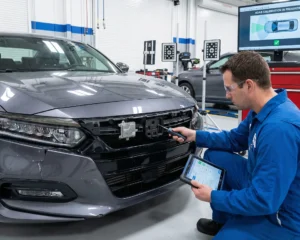
Even minor fender benders can affect ADAS sensor alignment. Front-end collisions may shift radar sensors mounted in the bumper, while side impacts can disturb blind spot monitoring components. Any collision repair involving bumper work, frame straightening, or body panel replacement should include ADAS calibration as part of the process.
After Suspension or Alignment Work
Changes to your vehicle’s ride height or wheel alignment can affect how ADAS cameras and sensors perceive the road. Suspension repairs, lift kit installations, and even routine wheel alignments may alter the reference points your safety systems use to function accurately.
When Dashboard Warnings Appear
Modern vehicles often alert you when ADAS systems detect calibration problems. If you see warnings for lane departure, collision avoidance, or camera systems on your dashboard, these should be addressed promptly along with any other warning lights. Ignoring these alerts means driving without the safety protection you expect from your vehicle.
The Two Types of ADAS Calibration
Professional ADAS calibration typically involves one of two methods, or sometimes both, depending on your vehicle’s requirements.
Static Calibration
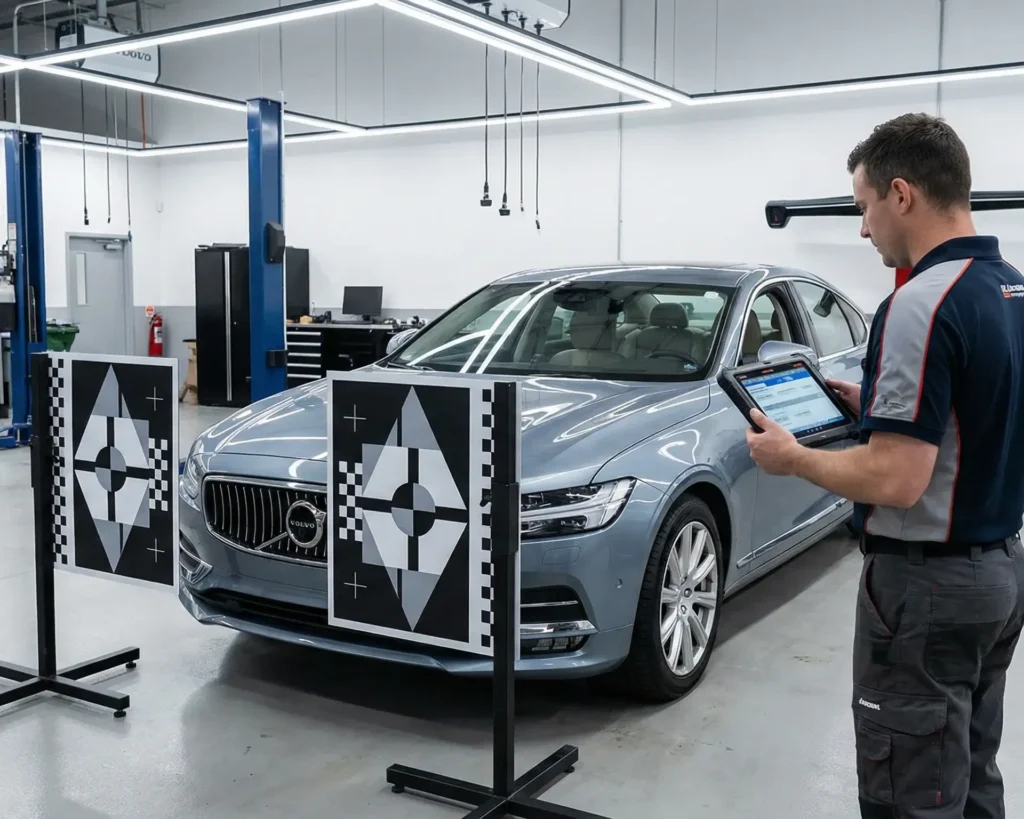
Static calibration occurs in a controlled indoor environment with the vehicle parked on a perfectly level surface. Technicians position specialized target boards at precise distances and angles from the vehicle, then use manufacturer-approved software to adjust camera and sensor settings. This process requires specific lighting conditions, proper tire inflation, and correct vehicle height.
Dynamic Calibration
Dynamic calibration requires driving the vehicle under specific conditions while the onboard computer recalibrates sensors using real-world road references. The technician drives at designated speeds on roads with clearly visible lane markings, allowing the system to reset itself based on actual driving conditions.
Risks of Skipping ADAS Calibration
Choosing to skip ADAS calibration after a repair might seem like a way to save money, but this decision carries serious consequences. A miscalibrated forward collision warning system might fail to alert you to an obstacle, or worse, trigger false alarms that cause you to ignore genuine warnings. Lane keeping assist that pulls your vehicle toward the wrong position could actually cause an accident rather than prevent one.
Insurance and warranty complications also arise from improper calibration. If an accident occurs and investigation reveals that ADAS systems were not properly calibrated after a repair, your insurance claim could be denied. Vehicle warranties may also require proof of proper calibration following covered repairs.
Why Professional Calibration Matters
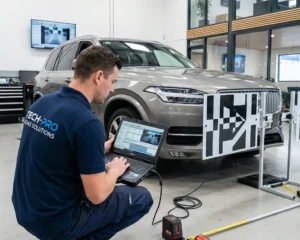
ADAS calibration is not a do-it-yourself project. The process requires manufacturer-specific software, specialized targets and fixtures, precisely leveled work areas, and technicians trained in the exact procedures for your vehicle’s make and model. The I-CAR organization provides industry-recognized training and certification for technicians working with ADAS systems. Choosing a repair shop with qualified technicians and proper equipment protects your investment and your safety.
What to Expect During ADAS Calibration Service
When you bring your vehicle in for ADAS calibration, the process typically begins with a comprehensive diagnostic scan to identify which systems require attention. The technician reviews your vehicle’s specific calibration requirements based on make, model, and year, then prepares the work area according to manufacturer specifications.
The actual calibration process generally takes one to three hours depending on which systems need attention. After completing the calibration procedures, technicians perform verification tests to confirm all systems are functioning correctly. You should receive documentation showing the work performed and confirmation that your ADAS is operating within manufacturer specifications.
Protecting Your Investment in Vehicle Safety
Your vehicle’s ADAS represents a significant investment in safety technology designed to protect you and your passengers. Proper calibration ensures this technology delivers the protection you paid for. As vehicles become increasingly dependent on these systems, the importance of maintaining precise calibration will only grow.
When scheduling repairs that might affect your ADAS, ask specifically about calibration requirements and ensure the shop has the capability to perform this critical service. Understanding the advanced diagnostic technology used in modern vehicle repair helps you appreciate the complexity involved. Your safety on the road depends on every system working exactly as designed, and proper ADAS calibration makes that possible.